
Demystifying the 1–3 Descriptor Grading Scale: How Continuous Assessment Feeds UNEB is an authoritative pedagogical masterclass engineered specifically for secondary school teachers, Heads of Department, and Directors of Studies across Uganda. Developed in consultation with National Curriculum Development Centre (NCDC) subject specialists and Directorate of Education Standards (DES) inspection frameworks, this guide delivers actionable structures, regulatory clarity, and practical tools to elevate classroom excellence.
Key Takeaways for Ugandan Secondary Teachers
Under official statutory guidelines issued by the Ministry of Education and Sports (MoES) and NCDC, secondary instructional preparation must prioritize observable learner competencies over passive teacher talk. By systematically aligning your curriculum sequencing, integrating authentic local East African scenarios, deploying structured continuous assessment rubrics, and adhering strictly to statutory standards, teachers eliminate inspection red flags while fostering genuine critical thinking and problem-solving in learners.

1. Statutory Framework & Regulatory Context in Uganda
The transformation of secondary education under the National Curriculum Development Centre (NCDC) and the Ministry of Education and Sports (MoES) has redefined the professional obligations of secondary educators. The era of dictating static textbook notes and administering memory-recall examinations has been permanently superseded by a competence-based architecture designed to develop critical thinkers, innovators, and problem solvers.
Under statutory guidelines enforced by the Directorate of Education Standards (DES), every teacher must provide verifiable evidence of intentional pedagogical preparation. Whether managing Senior 1 through Senior 4 under the competence-based curriculum or leading Senior 5 and Senior 6 under Advanced Level curricula, documentation must reflect exact syllabus weights, student-centred inquiry methods, and continuous assessment tracking.
Failure to align instructional delivery with these statutory guidelines carries serious institutional ramifications. When external inspectorate audits occur, poorly structured documentation, unmeasured learning outcomes, and disconnected assessment strategies frequently result in formal administrative sanctions, jeopardizing teacher career advancement and school accreditation ratings.
2. Pedagogical Architecture & Core Standards
To establish institutional consistency across departmental streams, educators must ground their instructional design in verified statutory frameworks. The table below outlines the core dimensions, official regulatory requirements, approved practical examples, and common compliance pitfalls:
| Descriptor Score | Performance Level Descriptor | Qualitative Competency Standard | UNEB Continuous Assessment Contribution |
|---|---|---|---|
| Score 1 (Basic) | Learner demonstrates limited understanding, requires substantial guidance to complete basic tasks. | Emerging competence; captures elementary facts but struggles with practical real-world execution. | Contributes 6.0% – 9.0% out of total 20% school-based assessment allocation. |
| Score 2 (Competent) | Learner consistently demonstrates proficient understanding and solves standard problems independently. | Proficient competence; satisfies all curriculum criteria, constructs valid solutions with minor guidance. | Contributes 10.0% – 15.0% out of total 20% school-based assessment allocation. |
| Score 3 (Outstanding) | Learner demonstrates exceptional mastery, innovates novel solutions, and guides peers effectively. | Exemplary competence; synthesizes interdisciplinary concepts, exhibits ethical leadership and originality. | Contributes 16.0% – 20.0% out of total 20% school-based assessment allocation. |
3. Practical Classroom Implementation: Moving Theory into Practice
Bridging the gap between high-level curriculum policies and daily classroom reality in a Ugandan secondary school requires a disciplined, step-by-step approach. Educators often encounter challenging teaching environments—such as crowded streams of 60 to 80 learners, limited access to commercial textbooks, and tight double-period schedules.
To overcome these challenges and ensure transformative student learning, implement the following four-stage pedagogical routine in your weekly preparation:
Phase 1: Framing the Diagnostic Inquiry
Every instructional unit must commence with an engaging, authentic dilemma drawn from local East African life. Rather than announcing an abstract topic (e.g. “Today we are studying electrochemistry”), open the session with an everyday challenge: “A rural health clinic in Gulu needs to keep life-saving vaccines cold during extended power outages. Using local scrap metals, lemon juice, and copper wire, how can we construct an emergency battery cell?” This anchors cognitive curiosity immediately.
Phase 2: Collaborative Small-Group Investigation
Organize students into small, heterogeneous clusters of 4 to 6 learners. Assign explicit functional responsibilities within each group: a team coordinator, a recorder, a resource manager, and a presenter. Distribute hands-on materials or guided scenario worksheets that prompt learners to manipulate data, formulate hypotheses, and debate alternative solutions.

Phase 3: Formative Checking & Criteria-Referenced Feedback
Circulate proactively among the clusters with an observation checklist. Avoid intervening immediately when students struggle; productive struggle is the core engine of competence acquisition. Intervene only with probing questions (“What evidence supports that deduction?” or “How does this step impact your final yield?”). Rate learner performance against clear criterion rubrics (Score 1, 2, or 3).
Phase 4: Synthesis & Metacognitive Reflection
Conclude the instructional sequence by having group representatives present findings to the wider class for peer critique. Summarize the fundamental conceptual takeaways on the chalkboard and require each student to log an individual reflective sentence in their subject notebook: “One key principle I mastered today, and one area I need to practice further.”
4. Departmental Quality Assurance & Inspection Readiness
To safeguard your school against unexpected inspection flags and maintain exemplary academic standards, your department must execute continuous internal quality audits. The matrix below details the primary operational red flags and their concrete, inspectorate-approved rectifications:
| Inspection Audit Area | Mandatory Documentation Evidence | Inspectorate Scoring Focus |
|---|---|---|
| Curriculum Planning | Approved 9-column schemes of work for all streams signed by D.O.S and H.O.D. | Alignment with NCDC syllabi, presence of Column 7 (Life Skills), observable competencies. |
| Continuous Assessment | Stream mark registers, sample Activities of Integration with marked student rubrics. | Legitimacy of 1-3 scores, presence of constructive written feedback, 20% UNEB mark audit. |
| Classroom Teaching | Live lesson observation of randomly selected teachers across sciences and arts. | Active learner engagement, use of low-cost teaching aids, evidence of 5-stage lesson planning. |
| Departmental Leadership | H.O.D meeting minutes, internal moderation reports, Records of Work Covered. | Weekly syllabus coverage tracking, remedial support documentation, staff development sessions. |
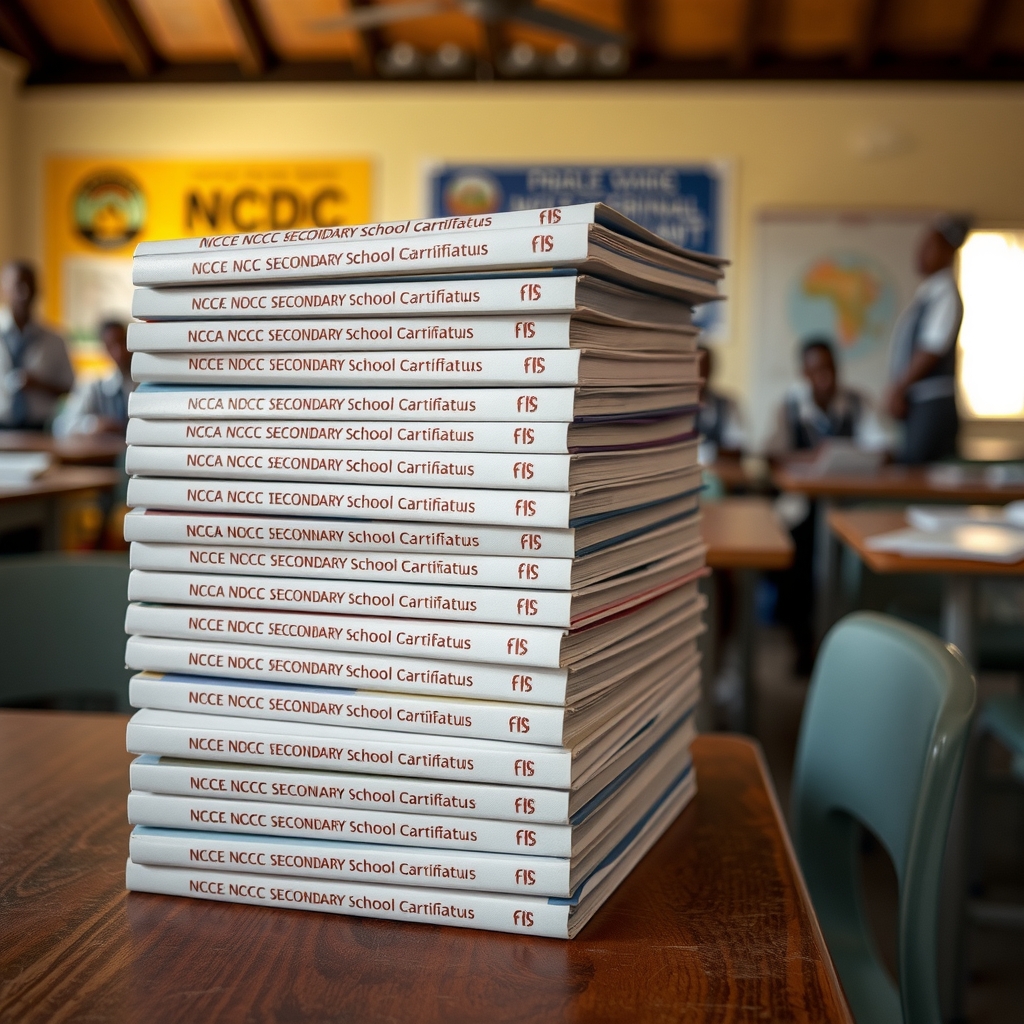
5. Eliminating Administrative Burnout with Omusomesa – The Smart Teacher
While the pedagogical rigor demanded by Uganda’s competence-based curriculum is transformative for learners, the sheer volume of manual paperwork it imposes on teachers is unsustainable. Drafting extensive 9-column schemes, formulating complex problem scenarios with multi-dimensional scoring rubrics, setting balanced UNEB-format examination papers, and logging weekly records of work consumed up to 15 hours of uncompensated personal time every week.
This administrative crisis is why Smart Teacher was built. Engineered exclusively for Uganda’s secondary educational ecosystem, Smart Teacher incorporates verified NCDC syllabus databases, statutory period weightings, approved competence descriptors, and UNEB test blueprints directly into an intelligent, web-based digital workstation.
Using the Smart Teacher Curriculum Guide, teachers select their subject, class level (Senior 1 through Senior 6), and academic term. In under 30 seconds, the system compiles a complete, statutory document formatted to official standards. Educators can edit details directly in their browser and export instantly to cleanly formatted Microsoft Word (.docx), native vector PDF, or Excel spreadsheets ready for immediate printing and administrative submission.
Frequently Asked Questions (Teacher FAQ)
How does ncdc descriptor grading scale 1 2 3 comply with official NCDC and MoES regulations in Uganda?
Official statutory regulations in Uganda require all secondary school documentation to strictly mirror the National Curriculum Development Centre (NCDC) syllabi. This includes utilizing approved 9-column formats, embedding observable learner competencies, specifying low-cost local teaching aids, and integrating 21st-century generic skills and values.
What are the most common inspection errors flagged by DES inspectors in Uganda?
The most frequent inspection queries raised by the Directorate of Education Standards (DES) include writing teacher-centred delivery instead of active learner tasks, leaving Column 7 (Life Skills and Values) blank, using unmeasurable verbs like ‘knows’ or ‘understands’, listing unavailable equipment, and failing to secure official Head of Department endorsement signatures.
Can teachers customize and export materials generated on Omusomesa – The Smart Teacher?
Yes. Every document generated on Smart Teacher—including schemes of work, activities of integration, examination papers, lesson notes, and records of work—is directly editable in your web browser and can be exported with one click into perfectly formatted Microsoft Word (.docx), PDF, or Excel (.xlsx) formats ready for immediate printing and administrative submission.
How does school-based continuous assessment connect to final UNEB UCE grading?
Under the revised Lower Secondary Curriculum in Uganda, school-based continuous assessment (Activities of Integration and competency tasks recorded on the 1-3 descriptor scale) contributes 20% to the student’s final Uganda Certificate of Education (UCE) examination score submitted to UNEB.
How can teachers save mobile data while preparing lessons in low-connectivity areas?
Smart Teacher is engineered for low-bandwidth environments, consuming less than 2MB of data to generate complete termly schemes or examination papers. Teachers can generate and export their materials to Word or PDF in seconds, then review and edit them 100% offline at home without ongoing data bundle consumption.
6. The 10-Point Teacher Action Checklist for Termly Preparation
Before submitting your documentation to the Director of Studies or stepping into the classroom, verify your instructional materials against this mandatory 10-point quality assurance checklist approved by Ugandan curriculum specialists:
- Syllabus Period Alignment: Cross-check that every topic matches the official NCDC period weights and that double periods are reserved for laboratory practicals or extended Activities of Integration.
- Observable Action Verbs: Ensure every single competence statement begins with an active, observable verb (Demonstrates, Designs, Computes, Models) rather than passive cognition.
- Authentic East African Context: Ground problem scenarios, case studies, and examination stimuli in recognizable local realities (soil preservation in Kabale, solar energy in Gulu, market trade in Kampala).
- Low-Cost Teaching Aid Specifications: Explicitly name locally improvised teaching aids (plastic bottles, cardboard, local soils, hand lenses) rather than generic or unavailable commercial items.
- Generic Skills & Values Integration: Verify that Column 7 explicitly documents critical thinking, teamwork, integrity, environmental responsibility, or empathy for each lesson.
- Continuous Formative Instruments: Ensure every sub-topic features an explicit formative assessment tool (observation checklist, 3-level rubric, oral questioning, exit ticket).
- Differentiated Task Structures: Incorporate tiered learning tasks providing remedial support for struggling learners and extension challenges for fast learners in large streams.
- Time Budget Realism: Budget realistic instructional time, intentionally factoring in beginning-of-term registration and end-of-term assessment consolidation.
- Departmental Moderation & Sign-Offs: Secure formal signature endorsements from your Head of Department (H.O.D) and Director of Studies (D.O.S) on all master sheets.
- Digital Archival & Backup: Maintain both a physical print binder in the departmental office and an editable digital backup (Word/PDF) exportable via Smart Teacher for instant inspection access.
7. Conclusion & Next Steps for Educators
Excellence in secondary education across Uganda begins with rigorous, deliberate pedagogical planning. By adopting standardized statutory frameworks, embedding authentic community inquiry, and leveraging modern digital tools, Ugandan teachers reclaim their evenings while inspiring learners toward national and global competitiveness.
Explore our related guides across the Smart Teacher ecosystem: dive into our Scheme of Work Generator, explore the Activity of Integration Maker, or visit the Smart Teacher App Hub to start planning your upcoming academic term with speed and confidence.
Leave a Reply